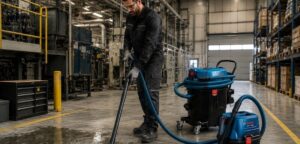
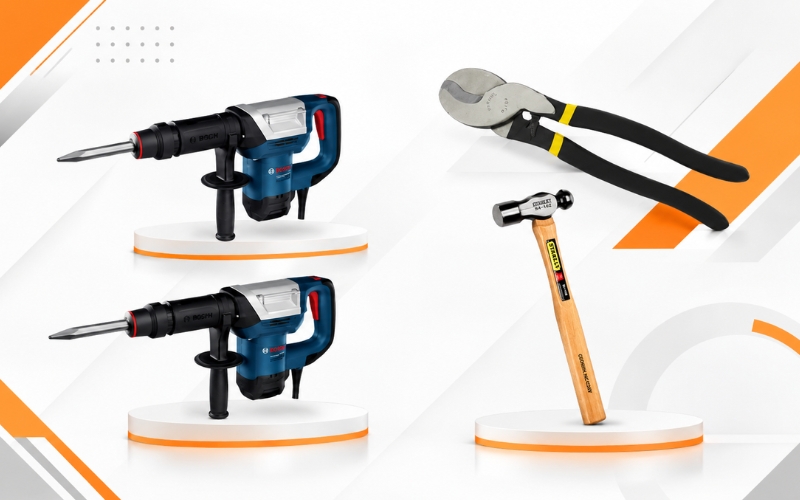
Tools are essential for construction, fabrication, maintenance, repair, manufacturing and workshop applications. Among the most commonly used categories are power tools and hand tools. While both are designed to make work easier, they are suited to different applications.
Understanding the difference between power tools and hand tools can help professionals, technicians and businesses choose the right equipment for their work.
What Are Power Tools?
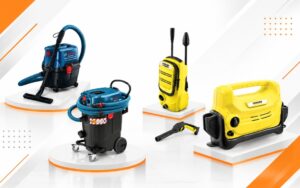
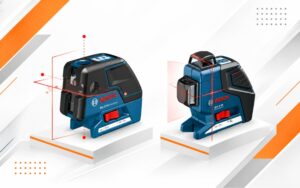
Power tools use an external energy source such as electricity, batteries or compressed air to perform an operation. They are generally selected when speed, power and productivity are important.
Examples include:
- Drilling machines
- Angle grinders
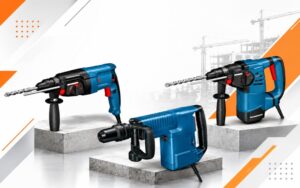
- Demolition hammers
- Cutting machines
- Sanders
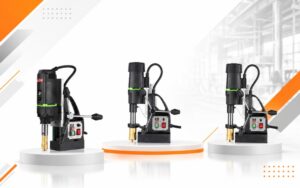
- Magnetic drill machines
- Power screwdrivers
Power tools are commonly used in construction, manufacturing, fabrication and industrial maintenance.
What Are Hand Tools?
Hand tools are manually operated tools that do not require an external power source. They are widely used for assembly, repair, maintenance and general workshop tasks.
Common hand tools include:
- Hammers
- Pliers
- Screwdrivers
- Spanners
- Wrenches
- Chisels
- Hacksaws
- Utility knives
- Scissors
Professional hand tools are useful when precision, portability and control are required.
Power Tools vs Hand Tools
Speed
Power tools can complete many repetitive operations faster than manual tools. For example, a power drill can create multiple holes much more quickly than a manually operated drilling method.
Control
Hand tools can provide greater direct control for certain small or delicate tasks. They are often preferred where careful adjustment is required.
Productivity
Power tools are particularly useful for repetitive and heavy-duty applications where reducing manual effort is important.
Portability
Many hand tools are compact and easy to carry. Cordless power tools can also offer excellent portability, particularly where electrical connections are not readily available.
Maintenance
Hand tools generally have fewer mechanical components. Power tools may require additional maintenance, inspection and servicing depending on their design and frequency of use.
When Should You Use Power Tools?
Power tools are suitable when you need to:
- Drill multiple holes
- Cut or grind materials
- Break concrete or masonry
- Perform repetitive fastening
- Complete large-scale construction work
- Increase productivity
- Perform heavy-duty operations
For example, an angle grinder may be suitable for cutting or grinding metal, while a demolition hammer can be used for breaking concrete.
When Should You Use Hand Tools?
Hand tools can be suitable for:
- Small repairs
- Assembly work
- Maintenance
- Tight spaces
- Precision tasks
- Quick adjustments
- Applications where electrical power is unavailable
A combination of both categories is often useful in professional workshops and industrial environments.
Why Use Both Power and Hand Tools?
Power tools and hand tools are not necessarily competing alternatives. In many professional applications, they work together.
For example, a technician may use a power drill for creating holes and then use a hand tool for final assembly or adjustment. Similarly, a fabrication professional may use a grinder for cutting or finishing and hand tools for positioning or fastening.
Choosing a Reliable Tool Supplier
When purchasing tools for professional applications, product quality, availability and after-sales support should be considered.
Perfect Pipes & Safety supplies both power and hand tools in Mumbai and offers product categories including Bosch Power Tools, Stanley Hand Tools and Eibenstock Magnetic Drill Machines. (Perfect Pipes & Safety)
Conclusion
The choice between power tools and hand tools depends on the application, material, workload, required precision and working environment. Power tools are generally useful for speed and heavy-duty operations, while hand tools provide portability, control and convenience for many maintenance and assembly tasks.
For professional users looking for power tools and hand tools in Mumbai, having access to both categories allows them to select the right equipment for different jobs and applications.